

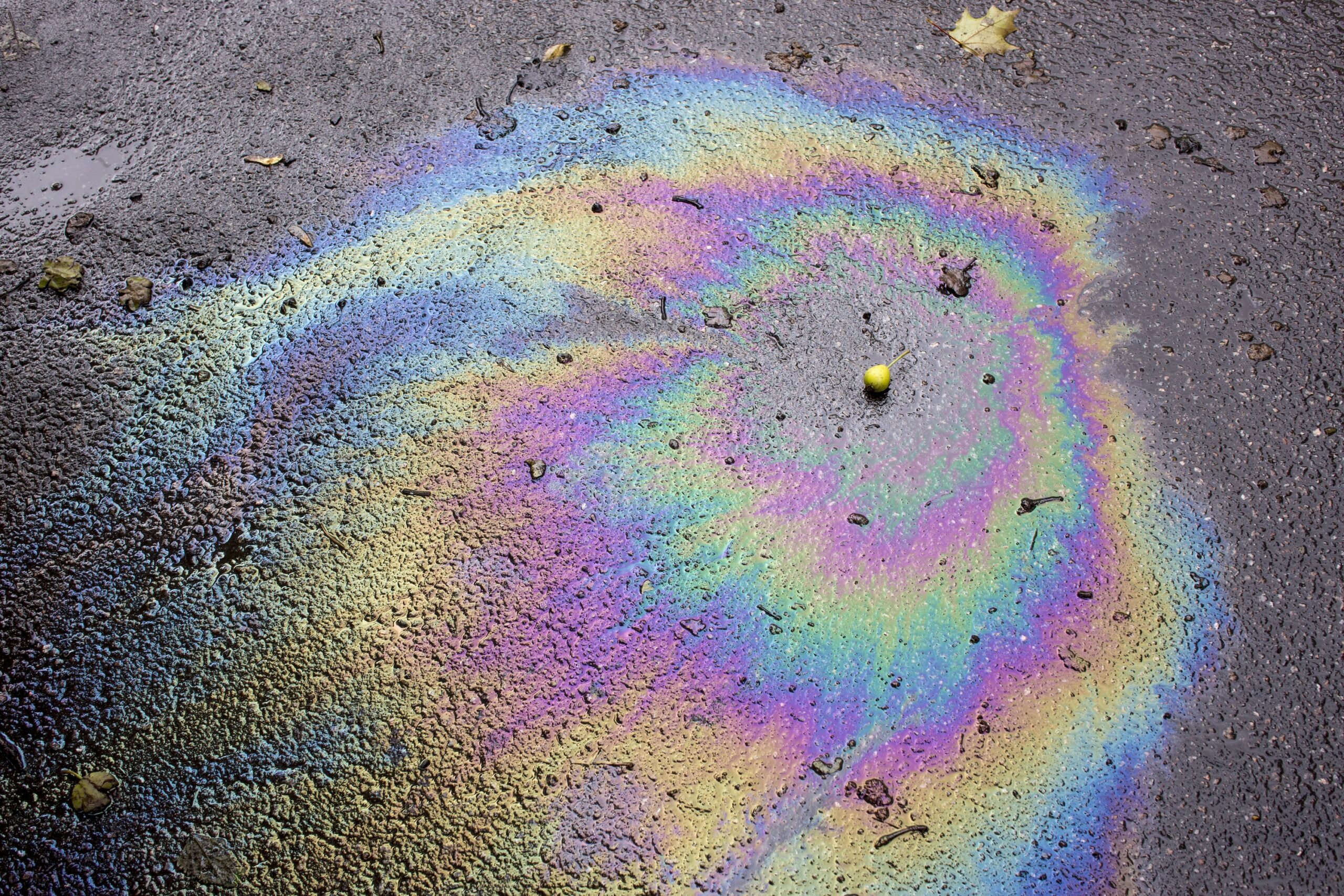
Most drivers notice a spot under their vehicle at some point. Sometimes it is nothing serious, like water from the air conditioning system. Other times, it can be an early warning sign that something needs attention. In this month’s blog post, we examine different types of vehicle fluid leaks and why it’s important to promptly address small leaks to avoid potential breakdowns and costly vehicle repairs.
The problem is that many fluid leaks start small. A few drops on the driveway may not seem like a big deal, but those drops can turn into a bigger repair if the cause is not checked. Your vehicle depends on several fluids to keep major systems working properly. When one of those fluids gets low or contaminated, it can affect safety, performance, and reliability.
Not Every Leak Looks the Same
Different fluids can leave different clues. For example:
- Clear water is often normal condensation from the air conditioning system.
- Brown or black fluid may be engine oil.
- Red or pink fluid could be transmission fluid or power steering fluid.
- Green, orange, yellow, or pink fluid may be coolant.
- Clear or light yellow oily fluid could be brake fluid.
Color can help, but it does not always tell the full story. Fluids can darken over time, mix with dirt, or spread across parts before they hit the ground. That is why it is smart to have the vehicle inspected instead of guessing.
Why Small Leaks Can Become Bigger Problems
A small oil leak can get worse and leave engine parts under-protected. A coolant leak can lead to overheating, especially in stop-and-go traffic or hot weather. A brake fluid leak can affect stopping power, which is a serious safety concern. A transmission fluid leak can lead to shifting problems and expensive repairs if the fluid level drops too low.
Sometimes the leak is not coming from the spot directly above the stain. Airflow under the vehicle can move fluid backward, making it harder to find the source without putting the vehicle on a lift.
Preventative Maintenance Helps Catch Leaks Early
Routine inspections are one of the best ways to catch fluid leaks before they cause damage. During preventative maintenance, a technician can check:
- Fluid levels and condition
- Hoses, seals, and gaskets
- The radiator and cooling system
- Brake lines and fittings
- Transmission and power steering components
- Signs of wetness, seepage, or buildup underneath the vehicle
Finding a worn hose, loose clamp, or small gasket leak early can often help prevent a breakdown later.
When to Schedule an Inspection
You should have your vehicle checked if you notice repeated spots under it, a burning smell, a low fluid warning light, overheating, steering changes, brake pedal changes, or unusual shifting. Even if the vehicle seems to drive normally, a leak is worth taking seriously.
A small stain today can be your vehicle giving you an early warning.
If you have noticed fluid spots where you park, contact the service professionals at Geller’s Automotive today to schedule an inspection. We can find the source, explain what is going on, and help you take care of the issue before it becomes a larger repair.