


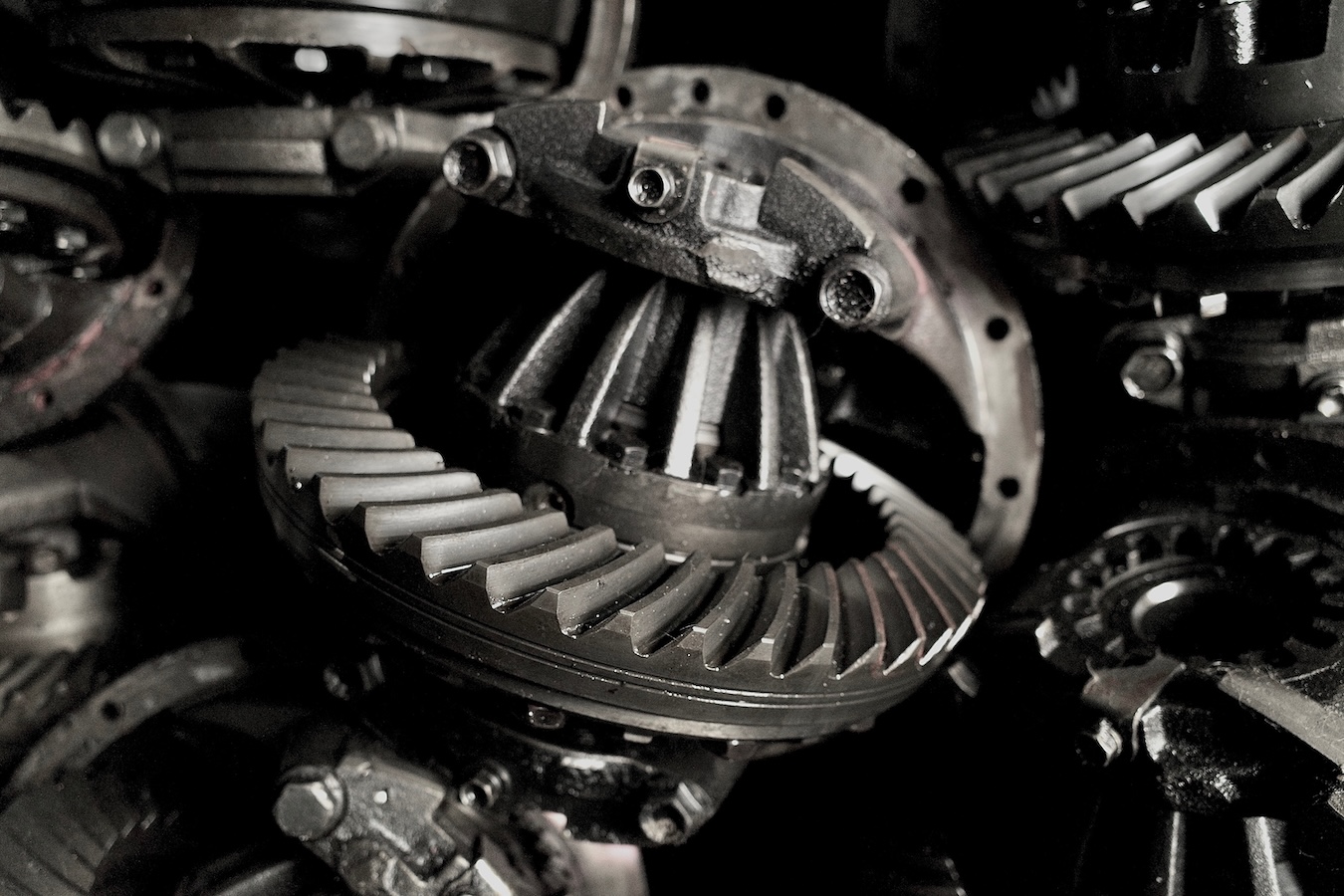
When it comes to vehicle maintenance, most owners focus on oil changes, brakes, and tires. But one essential component often flies under the radar—the differential. Though it operates quietly beneath your vehicle, the differential plays a crucial role in handling, stability, and overall drivetrain performance. In this month’s blog post, we take a closer look at what the differential does, common issues to watch for, and how to keep it in top condition.
What Is a Differential?
The differential is a gear assembly located between your drive wheels. In rear-wheel-drive vehicles, it sits on the rear axle; in front-wheel-drive vehicles, it’s built into the transaxle. All-wheel and four-wheel-drive systems may include front, rear, and center differentials. Its primary function is to allow each wheel to rotate at different speeds while still receiving torque from the engine—a necessity for safe and efficient turning.
How Does It Work?
When your vehicle makes a turn, the outside wheels must travel a greater distance than the inside wheels. Without a differential, all wheels would be forced to spin at the same rate, leading to tire scrubbing, poor traction, and added stress on the drivetrain. The differential compensates for these differences, enabling smooth cornering, improved grip, and reduced wear on tires and suspension components.
Common Issues and Warning Signs
Differentials are built for durability, but they can develop problems—especially if fluid maintenance is overlooked. Watch for these signs:
- Leaking gear oil around the differential housing or axle seals
- Worn gears or bearings, often caused by contaminated or low fluid
- Whining or grinding noises during acceleration, deceleration, or turns
- Vibration or clunking from the front or rear axle
- Reduced handling performance, especially when cornering
Ignoring these symptoms can lead to costly repairs or even complete drivetrain failure.
Maintenance Tips
- Change the fluid regularly: Gear oil lubricates and cools the differential. Replace it every 30,000–60,000 miles, or as recommended by your manufacturer.
- Inspect for leaks: Check for signs of fluid seepage during oil changes or tire rotations.
- Pay attention to sounds and feel: Unusual noises or handling quirks may indicate internal wear.
- Include it in routine service: Ask your technician to inspect the differential during scheduled maintenance—especially if you tow, off-road, or drive in extreme conditions.
Your differential may be out of sight, but it should never be out of mind. Keeping it well-maintained ensures smoother handling, longer tire life, and a more dependable vehicle. For expert inspection and service, contact the professionals at Geller’s Automotive today.