


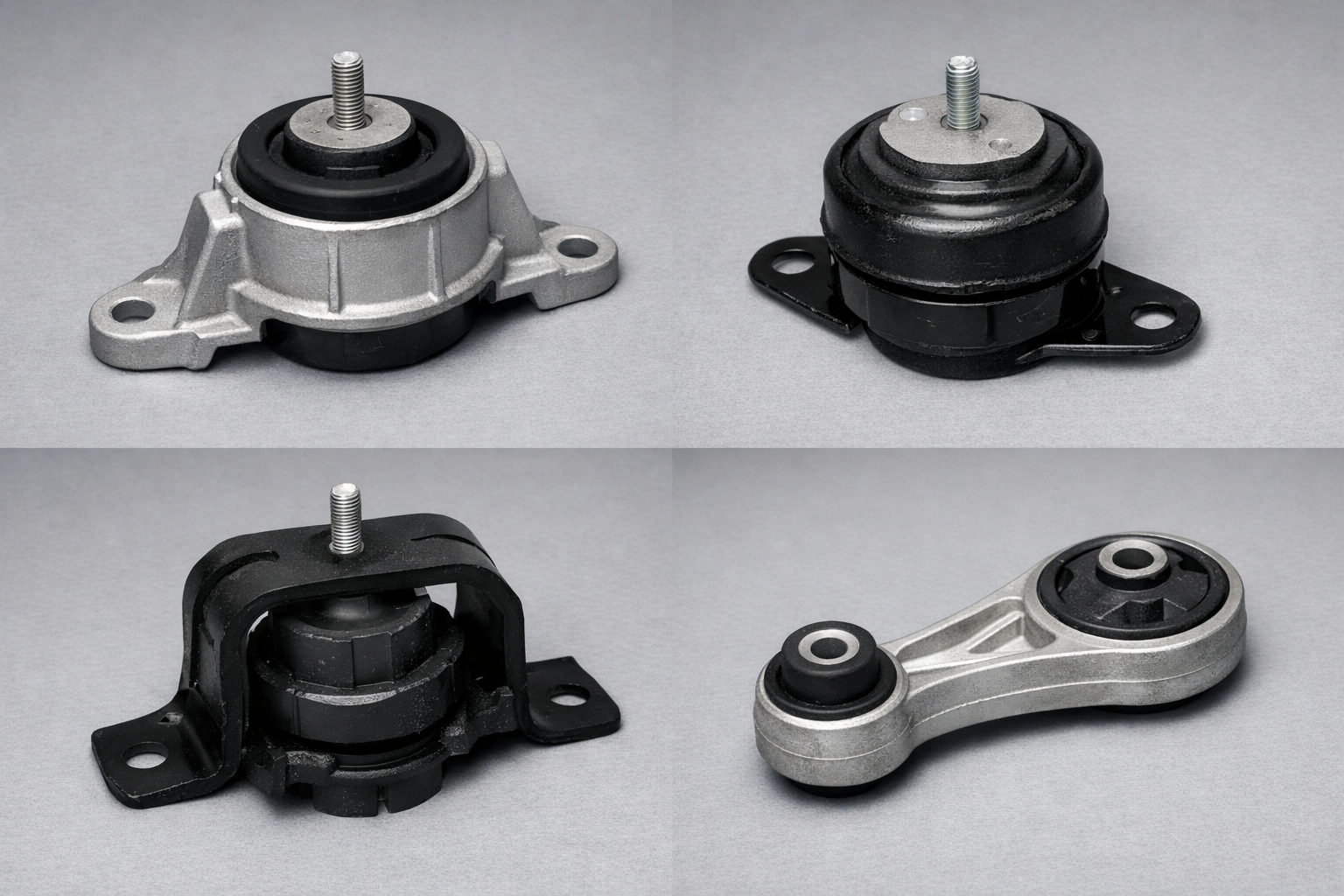
As winter weather descends upon us, you may be experiencing sudden, harsh vibrations when you start or shift your vehicle. While many vehicle owners assume this is a simple issue with the exhaust or an alignment problem, it is often a critical sign of Engine Mount Wear. Engine mounts are rubber-and-metal isolation components, and when cold temperatures stiffen their rubber, existing wear suddenly becomes noticeable.
In this month’s blog post, we explain the vital function of engine mounts, detail the specific signs and symptoms of their failure, discuss the causes of wear, and show why timely mount replacement is a preventative measure that saves more expensive parts of your vehicle’s driveline.
The Function of Engine Mounts
The engine mounts serve a critical dual purpose. First, they securely fasten the heavy engine and transmission to the vehicle’s chassis. Second, and perhaps more importantly, they act as insulators. They contain rubber or hydraulic fluid designed to absorb the engine’s inherent vibrations and shocks, preventing that movement and noise from transferring into the cabin. This ensures a smooth, quiet ride.
Signs and Symptoms of Problems
When the temperature drops, the rubber components inside the mounts stiffen, which reduces their ability to absorb vibration. This stiffening exacerbates existing wear.
You should look for the following signs of an issue:
- Sudden Rattles at Startup: A noticeable increase in noise, especially right after a cold start.
- Excessive Vibration: You feel a strong, uncomfortable shaking through the steering wheel, floor, or seats, particularly when idling or accelerating.
- Clunking or Banging Sounds: A distinct “clunk” when you shift gears (from Park to Drive, for example) or when quickly accelerating or braking. This indicates the engine is moving more than it should.
Causes and Prevention
Engine mount failure is typically a result of age, heat, and stress, but winter accelerates the symptoms. The constant cycles of heating up (while driving) and rapidly cooling down (when parked in freezing temperatures) cause the rubber to harden, crack, and eventually separate from the metal.
While it is impossible to stop wear completely, regular inspection is the best form of maintenance. There are not specific maintenance steps for a vehicle owner to perform on the mounts themselves; however, regular service allows a professional technician to visually check the mounts for cracks, leaks (in hydraulic mounts), and excessive play.
Early replacement of worn mounts is crucial. Ignoring the issue does not just mean a rough ride; it allows the engine to shake, which can put stress on other components, leading to premature failure of items such as CV joints and the exhaust flex pipe. Protect your vehicle’s driveline by having your mounts inspected today. Contact the service professionals at Geller’s Automotive to schedule an appointment.