


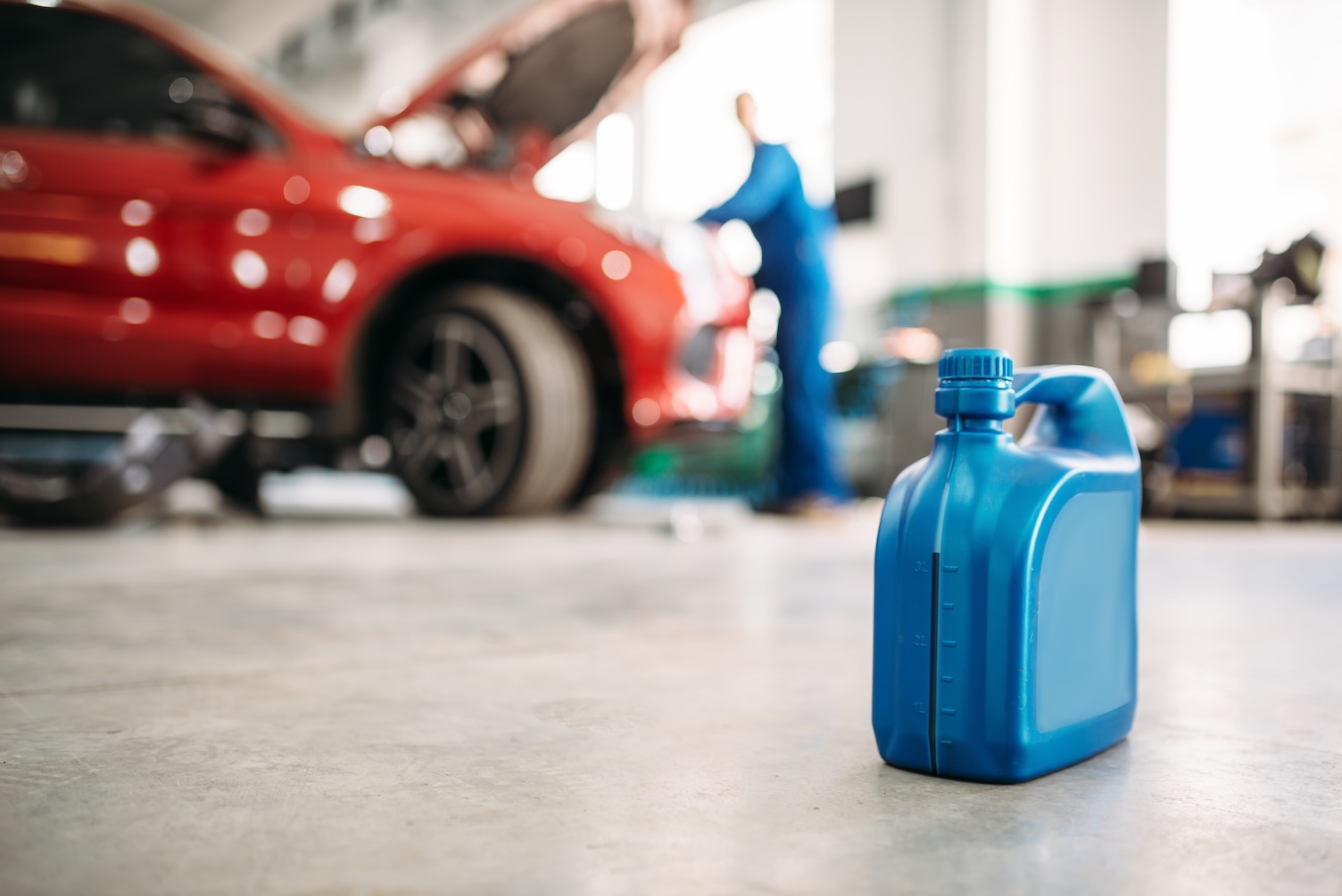
As the seasons shift from summer to winter, your vehicle’s fluids undergo more stress than you might think. These vital liquids—engine oil, transmission fluid, coolant, brake fluid, and windshield washer fluid—play critical roles in keeping your vehicle running smoothly. In this month’s blog post, we explain how temperature swings affect them and how you can help prevent breakdowns, extend your vehicle’s lifespan, and save money on repairs.
Engine Oil: Viscosity Matters
Engine oil thickens in cold weather and thins in heat. In winter, thicker oil can struggle to circulate quickly, leading to increased engine wear during startup. Conversely, in summer, overly thin oil may not provide adequate lubrication. Switching to seasonally appropriate oil—like a multi-viscosity blend (e.g., 5W-30)—ensures optimal performance year-round. Check your specific vehicle oil requirements before having the oil changed.
Transmission Fluid: Heat Is the Enemy
High temperatures can degrade transmission fluid, reducing its ability to lubricate and cool internal components. This can lead to slipping gears or transmission failure. Cold weather, while less damaging, can cause sluggish shifting. Regular fluid checks and timely replacement are key, especially before extreme seasonal changes.
Coolant/Antifreeze: Dual Purpose Protection
Coolant is not just for summer—it also prevents freezing in winter. A proper mix of antifreeze and water (typically 50/50) ensures your engine stays within safe temperature ranges. Over time, coolant loses its effectiveness, so have it flushed and refilled every 2–5 years depending on your vehicle’s recommendations.
Brake Fluid: Moisture and Temperature Sensitivity
Brake fluid is hygroscopic—it absorbs moisture from the air. In cold weather, this moisture can freeze, reducing braking efficiency. In heat, it can boil, leading to brake fade. Regular fluid replacement (usually every 2 years) helps maintain safe braking performance.
Windshield Washer Fluid: Choose Wisely
Summer blends may freeze in winter, while winter blends resist freezing but may not clean as effectively in warmer months. Always use a seasonally appropriate washer fluid to maintain visibility and avoid frozen lines or reservoirs.
Final Tip: Seasonal Fluid Check-Up
Before the peak of summer or winter, schedule a fluid inspection. A quick check can reveal early signs of wear, contamination, or improper levels—saving you from costly repairs and roadside emergencies.
By staying ahead of seasonal shifts, you will keep your vehicle running safely and efficiently no matter what Mother Nature throws your way. If you would like to schedule a fluid inspection, contact the service professionals at Geller’s Automotive for a full service appointment.